The Japanese Wellness Rituals Quietly Transforming How Americans Take Care of Themselves
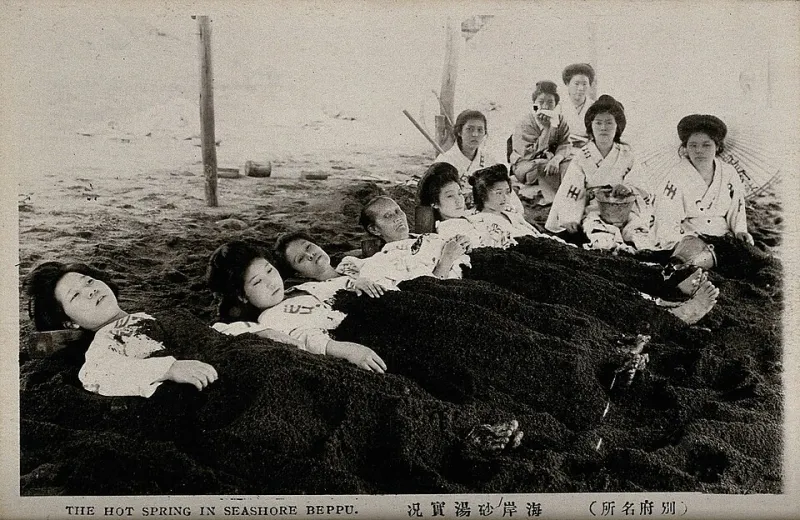
Photo: Unknown, CC BY 4.0, via Wikimedia Commons
A Different Kind of Self-Care
Open any American wellness publication and you will encounter a familiar vocabulary: bubble baths, face masks, candles, and the vague but insistent instruction to "invest in yourself." Self-care, as it is most commonly presented in the United States, tends to be episodic — a Sunday evening ritual, a once-monthly spa visit, a treat purchased as reward or consolation.
In Japan, the concept does not quite translate. Not because the Japanese do not value personal care — they do, profoundly — but because the underlying framework is entirely different. Japanese wellness is not a response to stress. It is a daily architecture designed to prevent it. Rituals are not indulgences reserved for special occasions. They are the quiet, repeating structure of an ordinary day.
This distinction matters enormously, because it changes not only what you do, but how you do it — and why.
As Japanese beauty and wellness practices gain visibility across the United States, it is this deeper philosophy that resonates most with the women who are genuinely transformed by it. The rituals themselves are accessible. The shift in perspective they invite is the real gift.
The Onsen Principle, Brought Home
Few Japanese wellness traditions are as iconic — or as misunderstood by Western audiences — as the onsen, the natural hot spring bath that has been central to Japanese culture for over a thousand years. In popular imagination, the onsen is a luxury destination, a scenic mountain retreat accessible only to travelers. In practice, its principles are entirely portable.
The onsen experience is not fundamentally about location. It is about temperature, duration, mindfulness, and transition. Traditional bathing culture in Japan involves entering warm water slowly, allowing the body to acclimate; remaining immersed long enough for the nervous system to genuinely shift from activation to rest; and emerging into cool air before returning to warmth — a cycle that stimulates circulation, supports lymphatic flow, and produces the deeply relaxed yet clear-headed state that the Japanese call yukkuri, roughly translated as "taking one's time."
You do not need a volcanic spring to approximate these benefits. A deep soaking tub, water temperature between 100 and 104 degrees Fahrenheit, and a commitment to twenty uninterrupted minutes — no phone, no podcast, no agenda — is a meaningful beginning. Enhancing the water with mineral-rich bath salts, Japanese yuzu citrus, or powdered green tea (matcha) elevates the experience while delivering genuine skin benefits: softening, brightening, and a subtle aromatic quality that engages the senses rather than overwhelms them.
The transition element is equally important. After soaking, resist the impulse to immediately return to activity. Wrap yourself in a clean towel or cotton robe, sit quietly for five to ten minutes, and allow your body temperature to settle. This liminal moment is where much of the restorative benefit lives.
Kobido and the Ancient Art of Facial Massage
If the onsen represents Japanese wellness at its most expansive, kobido — the ancient Japanese art of facial massage — represents its most refined expression. Dating to the fifteenth century, kobido translates loosely as "the ancient way of beauty," and it is precisely that: a systematic, highly skilled practice of manual manipulation that addresses facial muscle tension, lymphatic congestion, and skin circulation simultaneously.
In its traditional form, kobido is performed by trained practitioners over the course of an extended session, using dozens of distinct hand movements to sculpt, lift, and revitalize the face without a single needle or device. The results — a lifted jawline, reduced puffiness, improved skin tone and luminosity — have attracted devoted practitioners across Europe and are now gaining recognition in American wellness circles.
For home practice, a simplified version of kobido principles can be incorporated into your daily routine in as few as five minutes. The following sequence, performed after cleansing and before applying any treatment products, offers a meaningful introduction:
Lymphatic Drainage Strokes: Beginning at the center of the forehead, use the flat pads of your fingers to apply gentle, sweeping pressure outward toward the temples, then downward along the sides of the face to the jawline, and finally down the neck toward the collarbone. Repeat this sequence five times. The intention is not deep pressure but directional guidance — encouraging stagnant fluid to move toward the body's natural drainage pathways.
Jawline Sculpting: Using the knuckle of your index finger, apply firm, rolling pressure along the jawline from chin to ear, working in small circles. This movement addresses the masseter muscle, which carries an extraordinary amount of tension in individuals who clench or grind, and which has a direct visual impact on facial contour.
Eye Area Awakening: With your ring fingers — the weakest fingers, used deliberately here to prevent excessive pressure — tap gently in a circular pattern around the orbital bone, moving from the inner corner of the eye outward along the brow, then inward beneath the eye. This stimulates microcirculation in an area prone to puffiness and fatigue.
Performed consistently each morning, this brief sequence begins to produce noticeable cumulative results within three to four weeks.
Forest Bathing as a Beauty Practice
Shinrin-yoku, or forest bathing, entered the Western wellness lexicon several years ago, primarily through the lens of stress reduction and mental health. Its connection to beauty, however, is equally well-established within Japanese wellness philosophy.
The practice involves slow, deliberate immersion in a natural environment — not hiking, not exercise, but simply being present among trees, breathing the phytoncide-rich air, and allowing the senses to engage without agenda. Japanese research has documented measurable reductions in cortisol levels following even brief forest bathing sessions, and it is cortisol — chronic, elevated cortisol — that accelerates collagen breakdown, triggers inflammatory skin conditions, and disrupts the hormonal balance that underpins healthy skin function.
For urban Americans, true forest bathing may require intentional planning. A city park, however, can serve a genuine purpose. The key is duration — a minimum of twenty minutes — and the quality of attention brought to the experience. Leave the earbuds at home. Walk slowly. Notice texture, light, and scent. The skin benefits are not metaphorical; they are physiological.
Building Your Own Japanese Wellness Architecture
The most important insight offered by Japanese wellness culture is not any single practice. It is the understanding that beauty and well-being are not destinations to be reached but conditions to be maintained — through daily, deliberate, and deeply personal ritual.
Begin where you are. Perhaps it is five minutes of facial massage each morning. Perhaps it is a single weekly bath taken with full attention. Perhaps it is a Saturday walk in the nearest park, phone silenced, pace unhurried.
At Gatinuma Esthe, we believe that the most elegant beauty is always the most authentic — rooted in practice, refined over time, and entirely your own. Japanese wellness traditions offer not a prescription but an invitation: to slow down, to pay attention, and to discover what genuine care of the self actually feels like.
The rest, as the Japanese say, will follow naturally.
