From Cluttered Countertops to Curated Rituals: How the Japanese Principle of Gatinuma Is Reshaping American Skincare
There is a particular kind of exhaustion that comes not from doing too little, but from doing far too much. Ask any American woman who has stood in front of a bathroom cabinet stacked three rows deep with serums, toners, exfoliants, and overnight masks—each one purchased with genuine hope, most of them half-finished—and she will recognize that feeling immediately. It is the fatigue of abundance without clarity.
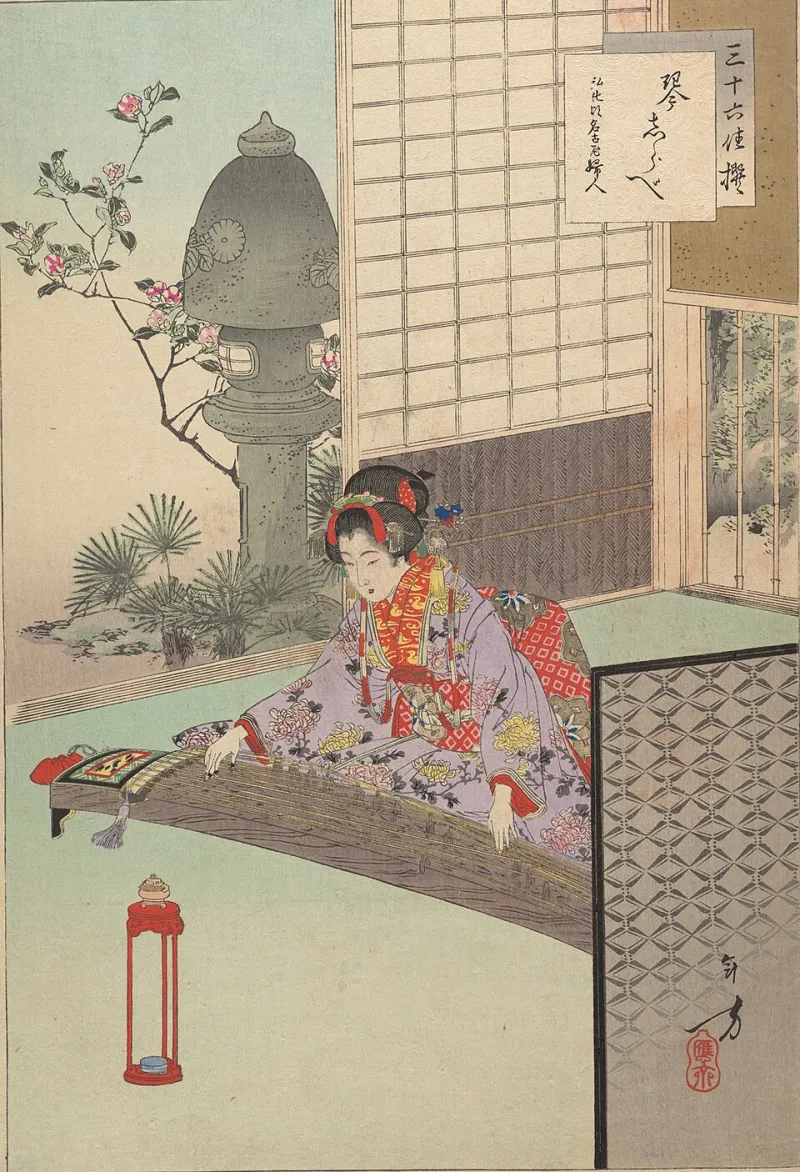
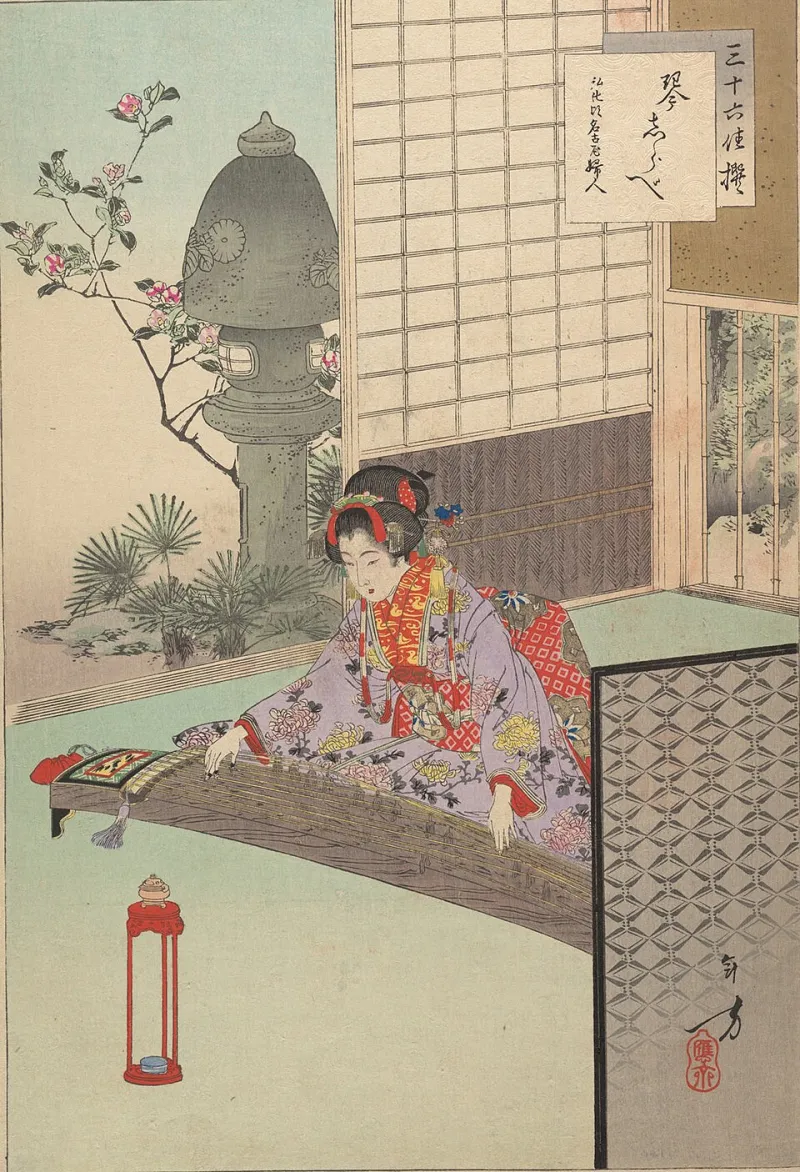
The Japanese concept of gatinuma speaks directly to this moment. Rooted in the idea of deliberate, mindful selection—choosing not what is available or heavily marketed, but what is genuinely aligned with one's needs—gatinuma offers a framework that is at once ancient in its sensibility and urgently relevant to the way contemporary women shop for beauty.
At Gatinuma Esthe, this philosophy is not simply a brand identity. It is the lens through which we understand what it means to care for skin with both intelligence and restraint.
The Problem with Fast Fashion Skincare
The skincare industry in the United States has, in many ways, adopted the rhythms of fast fashion. New ingredients cycle through social media with the speed of seasonal trends. A peptide that dominated beauty conversations in spring is replaced by a fermented botanical by fall. Influencer hauls celebrate volume—ten new products in a single unboxing—and the implicit message is that comprehensive coverage requires a comprehensive collection.
The consequences are measurable. Dermatologists and estheticians across the country report seeing clients whose skin has become sensitized not from a single harsh product, but from the cumulative effect of too many actives layered without coherence. The skin, which responds best to consistency and calm, is instead subjected to a rotating cast of ingredients it never fully adapts to.
Beyond the physical, there is a financial toll. A 2023 consumer survey found that American women spend an average of $300 per month on skincare—a figure that, for many, yields results far below what a more focused investment might produce.
What Gatinuma Actually Looks Like
To practice gatinuma in skincare is not to embrace austerity for its own sake. It is to make each product earn its place on the shelf through genuine purpose and demonstrated results.
In Japan, where this philosophy has long shaped both consumer culture and daily ritual, the approach begins with observation. A woman takes time to understand her skin's actual condition—not the condition she wishes it were in, and not the condition a product's marketing suggests it should be in. She notes how her skin behaves in different seasons, how it responds to stress, how it recovers after travel. From this understanding, she selects with precision.
The result is typically a small collection of products: a gentle cleanser, a hydrating toner or essence, a targeted treatment, a moisturizer suited to the season, and a reliable SPF. Each item is chosen with the expectation that it will be used to completion before another is considered. The ritual is consistent, the shelf is uncluttered, and the skin—given the stability it requires—begins to genuinely improve.
The Psychology of the Overcrowded Cabinet
Understanding why gatinuma resonates requires a candid look at what drives the opposite behavior. The psychology of impulse purchasing in beauty is well-documented: products are marketed as solutions to anxieties rather than answers to genuine needs. Fear of aging, fear of inadequacy, fear of missing a breakthrough—these are the emotional levers that fast skincare brands pull with considerable skill.
When a new product promises transformation in seventy-two hours, the purchase feels urgent. When that transformation does not materialize, the product is shelved and the search for the next solution begins. The cycle is self-perpetuating and, crucially, it is profitable—for everyone except the consumer.
Gatinuma disrupts this cycle not by eliminating desire, but by redirecting it. The satisfaction of building a curated routine, of watching skin respond consistently to products chosen with care, proves to be more durable than the short-lived excitement of a new purchase. Several women who adopted this approach describe the shift as similar to editing a wardrobe: initially uncomfortable, ultimately liberating.
Real Women, Real Transitions
The shift toward intentional skincare purchasing is not theoretical. Across the country, women are documenting their transitions from maximalist routines to curated ones, and their observations share a striking consistency.
Amanda, a thirty-eight-year-old marketing director in Chicago, describes her former routine as "a graveyard of good intentions." At its peak, her cabinet held over forty products. After discovering the gatinuma philosophy through a Japanese beauty forum, she spent three months gradually reducing her routine to six products, all chosen with specific purpose. "My skin cleared within two months," she says. "I think I had been overwhelming it for years without realizing."
Marielle, a forty-five-year-old teacher in Portland, took a different path. After a consultation with a Japanese esthetician, she was advised to stop layering multiple vitamin C products and focus instead on a single, high-quality formulation used with consistency. The improvement in her skin tone, she reports, came not from adding something new but from finally committing to something she already owned.
These stories are not anomalies. They are evidence of a broader shift in how American women are beginning to evaluate their relationship with beauty products—moving from accumulation as aspiration toward selection as self-respect.
Choosing with Intention: A Practical Starting Point
For those who feel drawn to the gatinuma approach but uncertain where to begin, the process need not be dramatic. A few guiding principles, drawn from Japanese skincare philosophy, offer a useful foundation.
Begin with a pause. Before purchasing anything new, allow the current routine to run its course for at least four to six weeks. Skin responds to consistency, and a product dismissed too quickly may simply have required more time.
Identify the genuine need. Rather than asking what a product promises, ask what the skin actually requires. Persistent dryness, uneven tone, and sensitivity each call for specific, targeted responses—not a broader arsenal.
Invest in fewer, better formulations. A single well-crafted essence from a Japanese skincare house will often outperform three mid-range serums used simultaneously. The concentration of intention—both in the product's formulation and in the consumer's commitment—matters.
Resist the seasonal refresh. The skincare industry encourages consumers to update their routines with every new launch cycle. Gatinuma asks instead: is what you currently have working? If so, the most sophisticated thing you can do is stay the course.
The Quiet Revolution, Now Visible
What is perhaps most striking about the gatinuma movement in American skincare is how quietly it has gathered momentum. It has not been driven by a single viral moment or a celebrity endorsement. It has grown through the lived experience of women who tried the opposite approach and found it wanting.
Japanese beauty culture has always understood that the skin is not a canvas for experimentation—it is a living system that rewards patience, consistency, and respect. The principle of gatinuma extends that understanding into the act of purchasing itself: what we choose to bring into our rituals is as important as how we use it.
In a culture saturated with options and optimized for impulse, the deliberate pause before the purchase may be the most radical beauty act of all. And for the women who have embraced it, the results—both on the skin and in the spirit—suggest it is also among the most rewarding.