Why Japanese Women Rarely Need a Dermatologist: The Preventative Skin Philosophy That Changes Everything
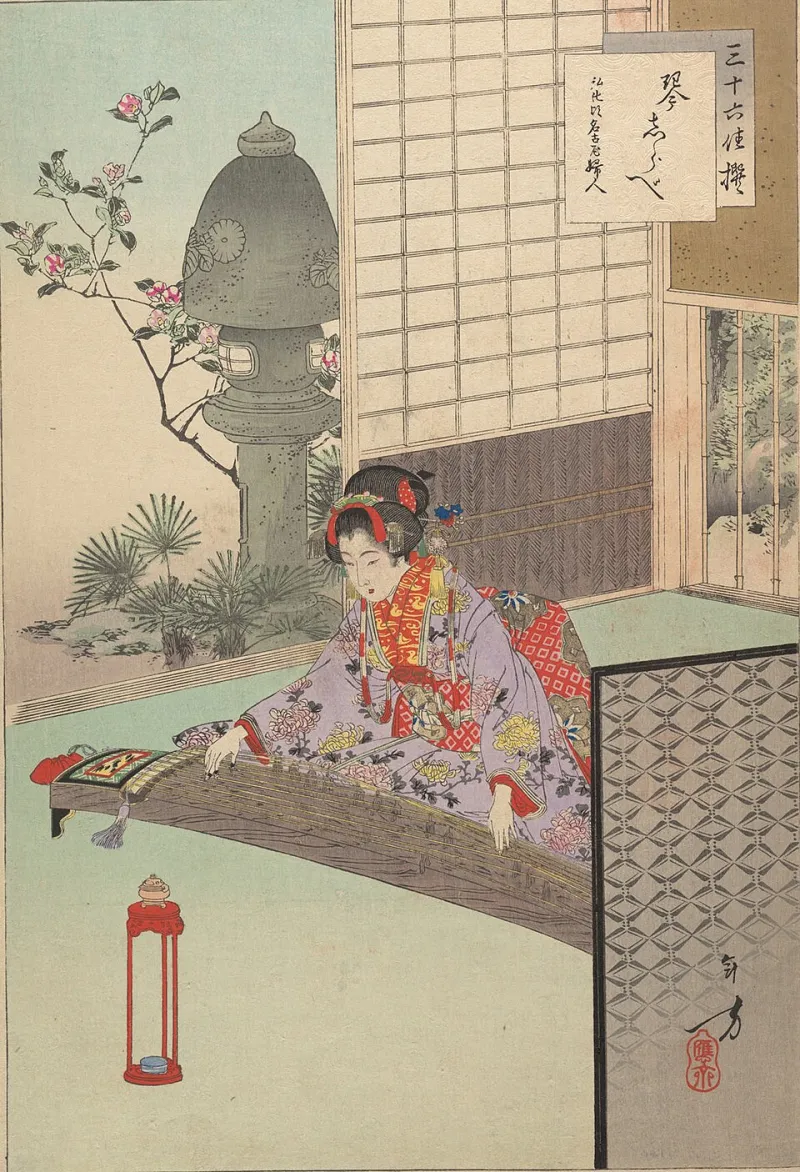
Photo: Toshikata Mizuno, Public domain, via Wikimedia Commons
In the United States, the path to better skin is often reactive. A breakout appears, and a prescription is sought. Fine lines deepen, and a consultation is booked. Redness persists, and a laser treatment is considered. The American approach to skincare has, for decades, been oriented around correction—addressing problems once they have already taken root.
In Japan, the logic runs in the opposite direction entirely.
For Japanese women, the goal is never to fix. It is to ensure there is nothing to fix. This distinction—subtle on the surface, profound in practice—explains why Japanese skin culture has produced some of the most consistently luminous, age-defiant complexions in the world, often without a single cosmetic procedure or clinical intervention along the way.
Prevention as a Daily Practice, Not a Precaution
The Japanese concept of bihada—literally, "beautiful skin"—is not defined by perfection in a single moment. It is understood as the cumulative result of daily choices made over months and years. Rather than waiting for damage to appear, Japanese beauty culture trains women from a young age to protect their skin as though it were already precious, because it is.
This means that sun protection is non-negotiable, applied every morning regardless of weather or season. It means that double cleansing is practiced not because the skin has become congested, but to ensure it never does. It means that hydration is layered in thin, absorbable increments—not flooded on in a single heavy application—so that the skin barrier remains intact and resilient across decades.
For American women accustomed to dramatic before-and-after transformations, this philosophy can feel almost too quiet to be effective. But the results speak with remarkable consistency: skin that maintains its texture, clarity, and elasticity well into middle age, without the assistance of fillers, peels, or prescription retinoids.
The Ingredient Intelligence Behind Japanese Routines
One of the most telling differences between Japanese and American skincare lies in ingredient literacy. In Japan, understanding what goes onto the skin—and why—is considered a basic form of self-care rather than the domain of enthusiasts alone. Women learn early to read formulations, to distinguish between actives that strengthen the barrier and those that gradually compromise it, and to favor ingredients with long track records of gentle efficacy.
Biofermented extracts, rice bran oil, sake lees, green tea polyphenols, and hyaluronic acid in its most refined molecular forms are not trends in Japan—they are foundations. These ingredients share a common quality: they work with the skin's natural processes rather than overriding them. The emphasis is on fortification, not disruption.
This stands in notable contrast to the American market's appetite for high-potency actives—retinol at maximum concentrations, glycolic acid used daily, vitamin C serums layered with exfoliants. These products can deliver visible results, but they can also erode the very barrier they are meant to improve when used without restraint. Japanese skincare philosophy would recognize this as borrowing against the skin's future.
Lifestyle as the Missing Ingredient
No examination of Japanese skin culture is complete without acknowledging the role of lifestyle—and here, the gap between East and West becomes particularly significant.
Diet is perhaps the most underestimated variable. The traditional Japanese diet is rich in fermented foods such as miso, natto, and pickled vegetables, all of which support the gut microbiome in ways that directly influence skin clarity and inflammation. Collagen-rich broths, seaweed, and green tea appear regularly in daily eating patterns, providing the body with the raw materials it needs to maintain skin structure from within.
Sleep, in Japanese wellness culture, is treated as a skincare investment rather than a luxury. The skin's repair cycle—its nightly process of cellular regeneration—depends on consistent, uninterrupted rest. Chronic sleep deprivation, so normalized in American professional culture, visibly accelerates the very concerns that send women to dermatologists: dullness, uneven tone, loss of firmness.
Stress management, too, plays a defining role. The Japanese practice of ikigai—finding purpose in daily life—and the ritual of ofuro (the nightly hot bath) are not merely cultural customs. They are mechanisms for cortisol regulation, and cortisol, when chronically elevated, is one of the most aggressive accelerants of skin aging known to science.
The Cost Calculation American Women Should Consider
A single dermatological procedure in the United States can cost anywhere from several hundred to several thousand dollars. Botox appointments, chemical peels, laser resurfacing, and injectable fillers are increasingly common expenditures for American women in their thirties and forties—often pursued not out of vanity, but out of a genuine desire to address concerns that feel beyond the reach of over-the-counter products.
The Japanese preventative model invites a different calculation. When the daily routine is designed to preserve rather than repair, the need for high-cost corrective interventions diminishes substantially. A well-formulated essence, applied consistently over years, costs a fraction of a single clinic visit—and contributes to a skin environment where clinic visits become increasingly unnecessary.
This is not to suggest that dermatological care has no place in a thoughtful beauty practice. Skin cancer screenings, medical diagnoses, and the treatment of clinical conditions require professional expertise that no skincare routine can replace. But the category of concerns that Japanese women rarely present to their dermatologists—premature aging, persistent dryness, chronic congestion, texture irregularity—are precisely the concerns that their daily routines are built to prevent.
What Adoption Looks Like for American Women
Embracing the Japanese preventative philosophy does not require dismantling an entire existing routine. It begins with a shift in orientation: from solving problems to preventing them.
For many American women, that means introducing daily SPF as an absolute non-negotiable rather than an occasional afterthought. It means simplifying an overloaded routine to allow the skin barrier to stabilize. It means investing in one or two high-quality, ingredient-intelligent products rather than cycling through an ever-expanding collection of dramatic actives.
It also means extending the concept of skincare beyond the bathroom counter—into the kitchen, into sleep schedules, into stress practices. The Japanese understanding of skin as a reflection of internal health is not mysticism. It is physiology, and it is increasingly supported by Western research into the gut-skin axis, the effects of chronic inflammation, and the measurable impact of sleep quality on cellular repair.
The Deeper Invitation
At its core, the Japanese preventative approach is an invitation to think differently about what beautiful skin actually requires. Not more intervention, but more intention. Not more products, but more patience. Not a correction made in a clinic, but a commitment made every morning and evening, in the quiet ritual of a thoughtful routine.
The women who embody this philosophy are not waiting for their skin to need saving. They are, day after day, ensuring that it never does. That discipline—unhurried, ingredient-aware, and deeply rooted in lifestyle—is perhaps the most elegant beauty secret Japan has ever kept.