Touchable, Radiant, Real: How Japanese Women Measure Beauty by Texture—Not Trends
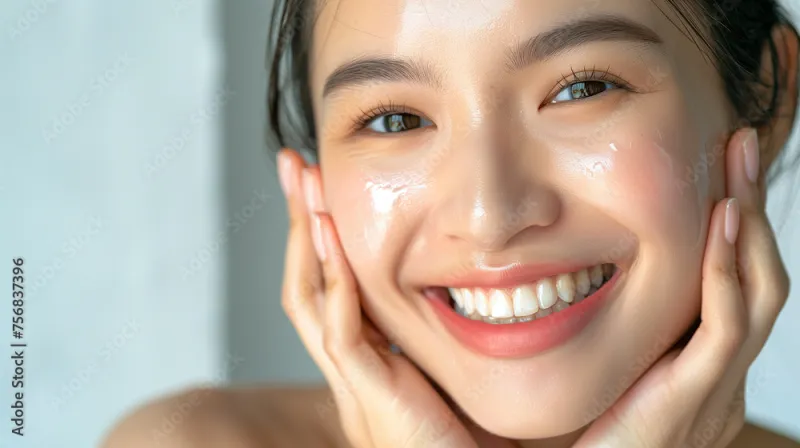
Photo: Japanese woman skincare routine smooth glowing skin texture close up elegant, via as2.ftcdn.net
Scroll through any American beauty feed and you will encounter an almost dizzying rotation of must-have products, ten-step routines reimagined weekly, and ingredients that promise to revolutionize your complexion by Friday. The pace is relentless, and for many women, it is quietly exhausting. Yet step into the world of Japanese beauty philosophy, and something remarkable happens: the noise falls away entirely.
In Japan, the benchmark for a beautiful complexion has never been a trending ingredient or an algorithm-approved glow filter. It has always been something far more intimate—the quality of skin that invites you to reach out and touch it. Smooth, luminous, almost imperceptibly refined in texture. This is the essence of what we at Gatinuma Esthe call the gatinuma effect: a state of skin so genuinely healthy that no trend could ever replicate it.
What Does "Texture-First" Beauty Actually Mean?
For Japanese women, skin quality is not measured in the language of brightness serums or pore-minimizing primers. It is assessed through a more tactile, almost meditative lens. Does the skin feel supple when touched? Does light diffuse across the surface in a soft, even manner rather than reflecting harshly off dry patches or uneven terrain? Is there a sense of plumpness—what the Japanese call mochi-hada, or "rice cake skin"—that speaks to deep, sustained hydration?
This philosophy places the emphasis squarely on the skin's actual condition rather than on how it can be made to appear in a single photograph. It is a meaningful distinction. Appearance can be engineered temporarily with the right lighting and the right product layered at the right moment. Texture, however, is earned. It is the cumulative result of consistent care, thoughtful ingredient choices, and a willingness to listen to what your skin genuinely needs rather than what the market insists it requires.
Why American Beauty Culture Defaults to Trends
The American beauty industry is, by design, trend-driven. New product launches generate excitement, social proof drives purchasing decisions, and the cycle of novelty keeps consumers engaged. None of this is inherently wrong—innovation has its place, and many genuinely effective ingredients have entered the mainstream through exactly this kind of cultural momentum.
The challenge arises when trends replace intention. When women find themselves abandoning a thoughtful routine in favor of a newly viral acid, or layering incompatible actives because each one individually earned a glowing review, the skin often pays the price. Sensitivity, barrier disruption, and a persistent sense that nothing is quite working are among the most common complaints at skincare consultations today—and they are frequently the result of chasing newness rather than cultivating consistency.
Japanese beauty philosophy offers a compelling counterpoint. Rather than asking "What is everyone using right now?", it asks a more grounding question: "What does my skin need to reach its best possible texture?"
The Pillars of Texture-Focused Skincare
Barrier Integrity Above All Else
A smooth, luminous texture begins with a healthy skin barrier. Japanese skincare has long understood what Western dermatology is now confirming with increasing urgency: when the outermost layer of skin is compromised, no amount of brightening serum or exfoliating treatment will produce lasting results. Products formulated with ceramides, fermented rice extracts, and gentle humectants like sodium hyaluronate work to reinforce this barrier rather than strip or challenge it.
For American women accustomed to aggressive exfoliation and high-concentration actives, this can require a genuine shift in philosophy. Gentler does not mean less effective. It means building a foundation strong enough to actually hold the benefits of everything applied on top of it.
Hydration as Architecture
In Japanese beauty, hydration is not a single step—it is a structure. Lightweight toners, or lotions as they are known in the Japanese tradition, are applied in multiple thin layers, each one allowed to absorb before the next is added. This technique, sometimes called 7-skin layering, creates a reservoir of moisture within the skin rather than simply coating its surface.
The result, over time, is that characteristic plumpness and translucency that defines beautifully textured skin. Light does not merely bounce off the surface; it seems to emanate from within. This is the luminosity that no highlighter can authentically replicate.
Consistency Over Complexity
One of the most quietly radical aspects of Japanese skincare philosophy is its relationship with simplicity and repetition. A modest routine performed faithfully every morning and evening will, without exception, outperform an elaborate routine applied sporadically whenever a new product arrives. Japanese women tend to cultivate their routines over years, refining rather than overhauling, and the texture of their skin reflects this patience.
For American women conditioned to expect rapid results, this asks for a reorientation of expectations. Texture improves gradually, in the same way that the finest silk becomes softer with each careful washing. The progress is real; it simply unfolds on a timeline that demands commitment.
Practical Steps Toward Your Own Gatinuma Glow
Shifting toward a texture-first approach does not require discarding everything in your current routine. It requires asking different questions of the products you already use—and of the ones you are tempted to add.
Audit your routine for barrier disruptors. If you are using multiple exfoliating acids, a retinol, and a vitamin C simultaneously without experiencing any sensitivity, your skin may be more resilient than most. But if you notice persistent dryness, redness, or a sense that your skin feels "tight" after cleansing, consider whether your routine is working against the very texture you are trying to cultivate.
Introduce layered hydration. Begin with a gentle, alcohol-free toner or essence immediately after cleansing, while skin is still slightly damp. Allow it to absorb, then apply a second layer before moving to a serum or moisturizer. Over several weeks, notice whether the overall feel of your skin begins to shift.
Resist the pull of the new. When a new ingredient or product captures your attention, give yourself a waiting period before purchasing. Ask whether your skin genuinely needs it or whether the appeal is primarily the novelty itself. This single habit, practiced consistently, can save considerable money and spare your skin considerable disruption.
Evaluate your skin by touch, not just by sight. After cleansing in the morning, run your fingertips gently across your cheekbones and forehead. Does the surface feel even and smooth, or can you detect subtle roughness and texture irregularities? This tactile check-in, borrowed directly from the Japanese approach to skin assessment, gives you information that no mirror can provide.
The Enduring Reward of Texture
Trends, by their very nature, expire. The ingredient that dominated every beauty conversation last spring has already been quietly replaced by something newer. But a complexion with genuine, refined texture—supple, even, quietly luminous—does not go out of style. It is, in every sense, timeless.
This is the beauty that Japanese philosophy has always understood and that Gatinuma Esthe was built to celebrate. It is not the beauty of a perfect photograph taken under perfect lighting. It is the beauty of skin that feels extraordinary to live in, every single day—skin that tells the story of consistent, intentional care rather than trend-driven experimentation.
That is the gatinuma glow. And it belongs to every woman willing to pursue it.