Spend Less, Glow More: The Japanese Art of Investing in Skincare That Actually Lasts
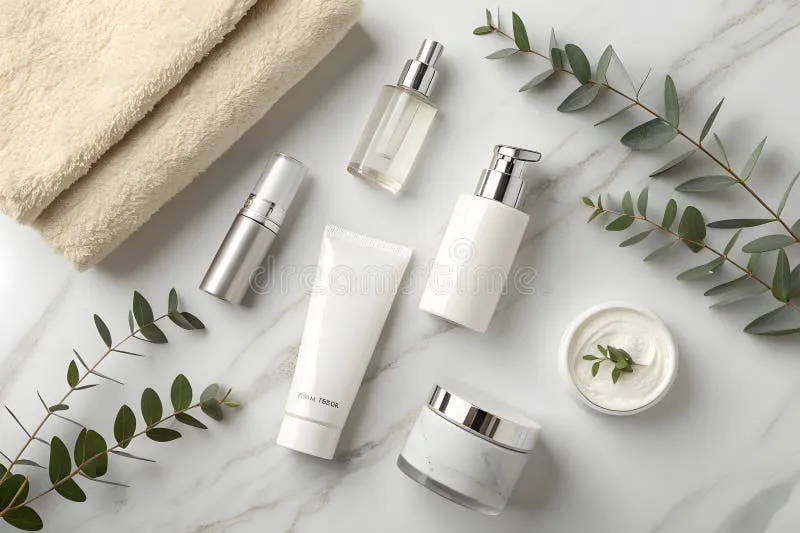
Photo: Japanese skincare minimal elegant products flat lay premium beauty routine, via thumbs.dreamstime.com
There is a particular kind of exhaustion that comes from standing in front of a bathroom cabinet overflowing with half-used serums, abandoned toners, and impulse-purchased masks that never quite delivered on their promises. If that image feels familiar, you are not alone. American women spend, on average, hundreds of dollars each year chasing the next breakthrough product—only to find themselves cycling back through the same skin concerns season after season.
Japanese beauty culture offers a striking contrast. It is not built on novelty or the thrill of the new. It is built on knowing—knowing your skin intimately, knowing which ingredients serve it faithfully, and knowing when to stop adding and start deepening.
At the heart of this philosophy lies a concept the Japanese call mono no aware: a gentle, bittersweet appreciation for the transience of things and, by extension, the quiet dignity of what endures. Applied to beauty, it translates into a profound respect for quality over accumulation—an understanding that a single, well-chosen product used consistently will always outperform a crowded shelf of mediocre options rotated on a whim.
The Cost of Keeping Up
The American beauty industry is masterfully engineered to create urgency. Limited-edition drops, influencer-driven launches, and the relentless promise of transformation in thirty days or fewer keep consumers in a perpetual state of purchasing. The result is not glowing skin—it is a fragmented routine that never allows any single product the time it needs to demonstrate real, measurable change.
Dermatologists and estheticians alike will confirm what Japanese women have practiced for generations: the skin requires consistency above all else. Active ingredients such as retinol, niacinamide, and vitamin C do not reveal their full potential in two weeks. They require months of patient, uninterrupted use. Every time a new product enters the rotation, that timeline resets—and the investment made in the previous product is quietly wasted.
When you calculate the cumulative cost of cycling through trend-driven purchases, the numbers become difficult to ignore. Three moderately priced serums purchased and abandoned within a year can easily exceed the cost of one premium, clinically validated formula used in full. The math, once examined honestly, tends to shift perspectives.
What Japanese Women Choose Instead
A typical Japanese skincare wardrobe is deliberately restrained. It might include a gentle oil or balm cleanser, a hydrating essence, a targeted treatment, and a broad-spectrum sunscreen—each selected after careful consideration of the skin's actual needs rather than the beauty calendar's current obsessions.
The products chosen tend to share certain qualities. They favor time-honored ingredients with documented efficacy: fermented rice water for luminosity, camellia oil for deep nourishment, green tea extract for antioxidant protection. These are not exotic novelties. They are ingredients that have been refined over centuries and studied rigorously for their long-term benefits.
Japanese skincare brands—many of which remain relatively understated in the American market despite their extraordinary formulations—invest heavily in research and texture refinement. The sensory experience of application is considered inseparable from efficacy. A product that feels luxurious encourages daily use; daily use is what produces results. This is not indulgence for its own sake. It is strategic design.
Building a Skincare Wardrobe With Intention
Adopting this philosophy in an American context does not require dismantling your entire routine overnight. It begins with a single, honest audit.
Examine what you currently use. Not what you own—what you actually reach for each morning and evening without prompting. Those are the products your skin has already selected for you. Everything else deserves scrutiny.
For each product under consideration, ask three questions: Does it address a specific, identified concern? Have you used it consistently for at least sixty days? Has your skin responded visibly and positively? If a product cannot satisfy all three, it may be occupying valuable space—both physical and financial—that a more intentional choice could fill.
When selecting replacements or additions, resist the pull of marketing language and look instead at ingredient lists, brand transparency, and formulation philosophy. Premium does not always mean expensive, but it does mean purposeful. A $60 essence used daily for six months represents a very different value proposition than a $20 serum purchased four times in the same period and never finished.
The Long View on Luminosity
One of the most quietly radical aspects of the Japanese approach to skincare is its relationship with time. Where American beauty culture tends to promise rapid transformation, Japanese beauty philosophy operates on a different timeline entirely—one measured in seasons rather than weeks.
This is not pessimism. It is precision. The skin is a living organ with its own renewal cycle, roughly twenty-eight days in youth and gradually longer with age. Meaningful change—the kind that holds, that compounds, that makes strangers ask what you have been doing differently—requires working with that cycle rather than attempting to override it with aggressive interventions.
Women who commit to this longer view often describe a shift that extends beyond their complexion. The act of choosing carefully, using faithfully, and observing patiently cultivates a different relationship with self-care altogether. It becomes less reactive and more intentional. Less about fixing and more about honoring.
Reclaiming Your Beauty Budget
The practical implications of this philosophy are genuinely liberating. When you stop purchasing in response to trends and begin purchasing in response to knowledge, the spending cycle slows considerably. A well-curated four-step routine costs less annually than most women currently spend on products they never finish—and it delivers far more.
Consider reallocating a portion of your current beauty budget toward one or two genuinely exceptional products rather than distributing it thinly across many adequate ones. Research Japanese formulations that have earned their reputations through decades of use rather than months of marketing. Give those products the time they deserve. Then watch what consistency, quality, and patience can accomplish together.
The glow that Japanese beauty philosophy cultivates is not a surface effect. It is the visible result of a sustained, thoughtful relationship between a woman and her skin—one that no impulse purchase can replicate, and no trend can replace.