After 40, Your Skin Finally Knows Itself: The Japanese Philosophy of Aging as Refinement
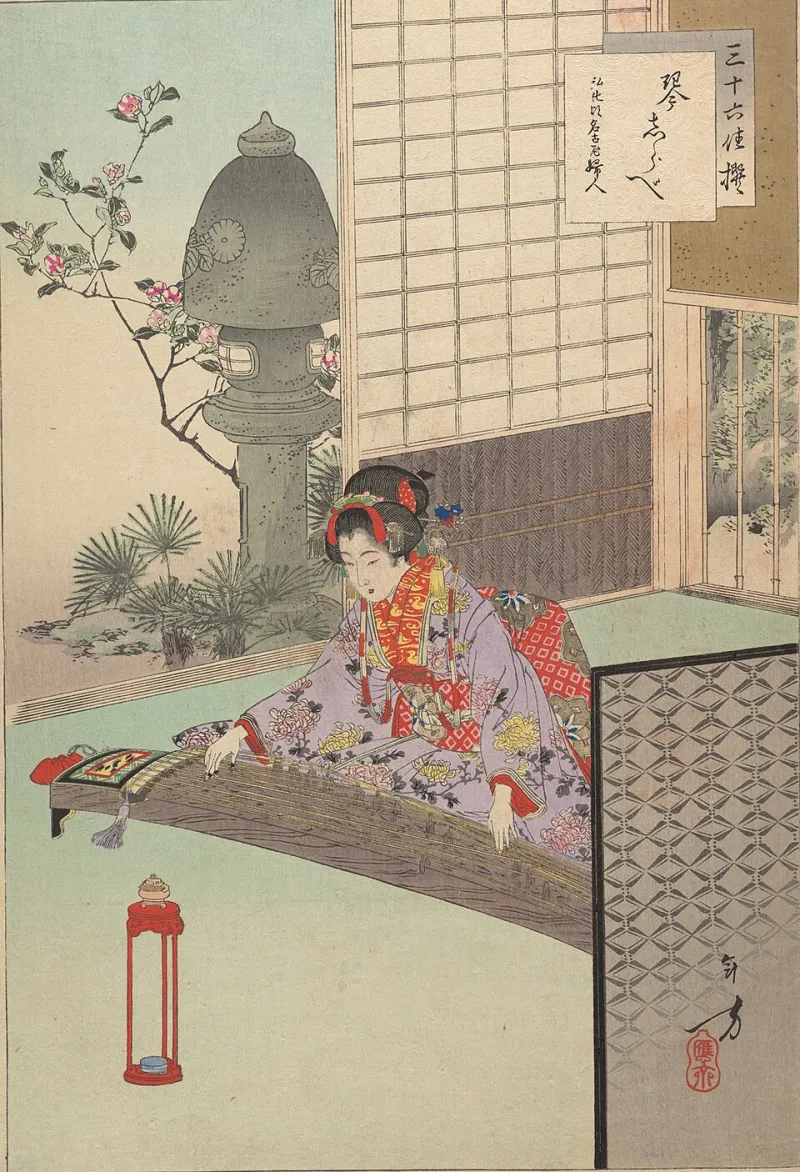
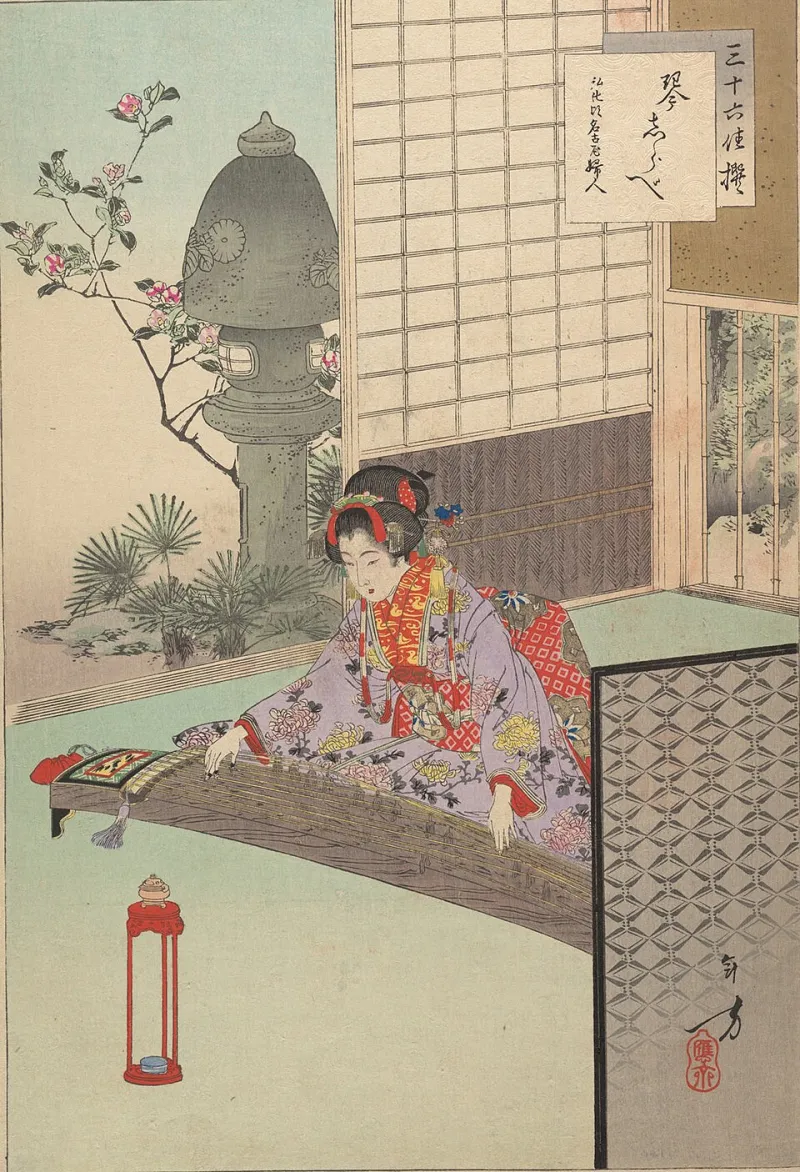
Photo: Toshikata Mizuno, Public domain, via Wikimedia Commons
American beauty culture has long treated the fortieth birthday as a kind of alarm bell—a signal to escalate, intervene, and correct. Retinol concentrations increase. Collagen supplements multiply. The language shifts from care to combat, and suddenly the skin a woman has lived in for four decades becomes something to be managed rather than celebrated.
Japan offers a different story entirely.
In Japanese aesthetics, the concept of wabi-sabi—the quiet beauty found in impermanence and natural evolution—extends into the way women relate to their own complexions. Mature skin is not a departure from beauty. It is, in many ways, its fullest expression. The philosophy is not passive resignation. It is something far more sophisticated: the recognition that skin, like any refined craft, deepens in character with time.
What Japanese Women Understand About Mature Skin That Western Culture Misses
One of the most persistent myths in Western anti-aging discourse is that skin becomes more difficult to manage as it ages. Japanese skincare philosophy challenges this assumption at its foundation. Mature skin, by its very nature, has already endured decades of seasonal shifts, environmental exposure, and hormonal fluctuation. The women who have tended to it carefully through those years arrive at 40 with something invaluable: an intimate, nuanced understanding of exactly what their complexion needs.
This knowledge is not incidental—it is the reward for years of attentive practice. A woman who has followed a consistent, layered skincare ritual through her thirties enters her forties with a skin barrier that has been continuously supported, a hydration baseline that has been deliberately maintained, and a refined sense of which ingredients serve her and which do not.
In Japan, this accumulated wisdom is treated as an asset. The goal after 40 is not to reverse the skin's history, but to honor it—and to build upon it with greater precision.
The Ingredient Shift: Moving Toward Depth Over Correction
Japanese skincare formulations have long prioritized umami-style layering—building moisture and nourishment through complementary, gentle ingredients rather than aggressive actives. For women over 40, this philosophy becomes even more relevant.
Ceramic-rich essences and fermented ingredients such as sake kasu (sake lees) and koji become central players in the mature Japanese skincare ritual. Fermentation, a cornerstone of Japanese culture in both food and beauty, produces bioavailable compounds that penetrate more readily into skin that has experienced some thinning of the epidermis. These ingredients do not strip or resurface—they replenish.
Hyaluronic acid remains a staple, but Japanese formulations often layer multiple molecular weights of the ingredient, allowing both surface hydration and deeper moisture binding. This approach addresses one of the most common concerns of mature skin: the sensation of dryness that persists even after moisturizer application.
Equally significant is the Japanese emphasis on tsubaki (camellia) oil, which has been used for centuries in Japan as a skin and hair treatment. Rich in oleic acid, it closely mirrors the skin's own sebum composition, making it exceptionally compatible with mature skin that may be producing less natural oil than it once did.
What these ingredients share is a philosophy of reinforcement—supporting what the skin does naturally rather than overriding it.
Releasing the Pressure of Trends
One of the quieter privileges that comes with age, and one that Japanese women seem to embrace more readily than their American counterparts, is the confidence to disengage from beauty trends that do not serve them.
The viral skincare cycle—driven by social media, influencer endorsements, and a constant rotation of new launches—can be particularly exhausting for women over 40, whose skin may react more sensitively to frequent formula changes or high-concentration actives introduced without careful transition.
Japanese beauty culture has always been somewhat resistant to trend-chasing, favoring instead the concept of katachi—a devotion to form and process over novelty. For the mature woman, this translates into a skincare practice that is anchored rather than reactive. She is not experimenting; she is refining. The routine becomes leaner, more deliberate, and more effective precisely because it is built on genuine self-knowledge rather than external pressure.
This is not a retreat from beauty. It is its most confident expression.
The Morning Ritual Reimagined for Mature Skin
In practical terms, the Japanese approach to skin after 40 often involves a gentle morning cleanse—sometimes water alone, or a mild micellar formula—to preserve the moisture balance established overnight. This is followed by a layered essence application, beginning with the lightest, most water-based formulas and building toward richer textures.
Sunscreen remains non-negotiable. Japanese women are among the most consistent users of broad-spectrum UV protection in the world, and for mature skin, this habit pays compounding dividends. Photoprotection is not a reactive measure in Japanese skincare—it is the foundation upon which every other result is built.
In the evening, the ritual expands. Double cleansing—first with an oil-based cleanser to dissolve the day's impurities, followed by a gentle foam or gel—ensures that the skin is thoroughly but gently prepared to receive treatment ingredients. A richer night cream or sleeping mask, often featuring shea, argan, or fermented rice extract, provides the extended moisture delivery that mature skin benefits from during the body's overnight repair cycle.
Reframing the Conversation Entirely
Perhaps the most transformative aspect of the Japanese approach is not any single ingredient or technique—it is the fundamental reframing of what it means for skin to age.
When the goal is refinement rather than reversal, the entire emotional register of skincare shifts. The ritual becomes a form of appreciation rather than damage control. The mirror becomes a place of observation rather than judgment. And the skin itself—with its history, its texture, its particular way of holding light—becomes something worth knowing deeply.
American women are beginning to sense this shift. The conversation around aging is slowly, meaningfully changing. But Japan has held this understanding for generations, encoded not just in its beauty formulations but in its broader cultural relationship with time, craft, and the quiet dignity of things that endure.
At Gatinuma Esthe, we believe that the most elevated approach to beauty is one that grows more intentional—not more anxious—with every passing year. Your skin after 40 is not a problem awaiting a solution. It is a practice arriving at its most interesting chapter.